RO Water Purifier Air Leak Tester | HX-108CQ
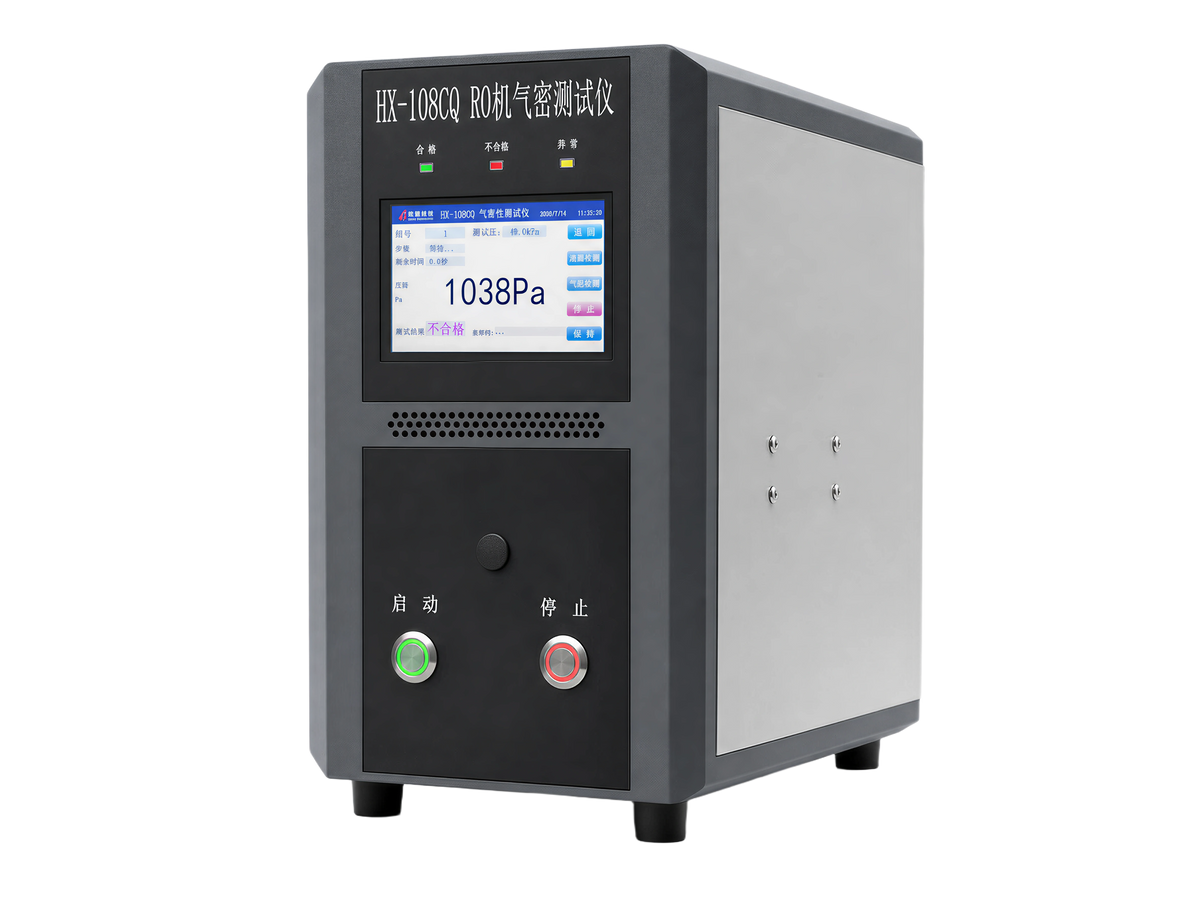
Fast, Reliable Air Leak Testing for RO Water Purifiers The HWAXEE HX-108CQ RO Water Purifier Air Leak Tester is a differential-pressure air leak te...
View RO Water Purifier Air Leak Tester | HX-108CQ ↗

Dry Testing · Residual Water · Water Purifier Manufacturing / Technical Guide
How does dry pneumatic leak testing help reduce water-related risks in RO purifier final inspection?
The Medium article describes the HWAXEE HX-108CQ airtightness tester for RO purifier production. It uses dry compressed air and differential-pressure analysis, with a ±3000 Pa sensor, 100–600 kPa test pressure, a 10–20 second core leak check, and RS232 barcode integration with storage for over 100,000 records. Define the final test scope and settings for the specific purifier and production process.

For quality assurance and plant management executives in the water treatment manufacturing sector, final assembly testing remains a critical bottleneck. Traditional hydrostatic or wet testing methods — which require submerging entire reverse osmosis water purifier systems into water tanks — introduce severe operational hazards. The lingering moisture trapped inside internal tubing, fittings, and filter elements frequently leads to internal mold growth, electrical corrosion, and component damage during transit or warehousing. Furthermore, wet testing is notoriously slow, creating production line congestion and driving up post-sale warranty claims due to undetected micro-leaks.
To address these persistent manufacturing challenges, modern assembly lines are rapidly adopting dry pneumatic testing solutions. The HWAXEE HX-108CQ RO Air Tightness Tester utilizes clean compressed air instead of water to perform rigorous leak detection. Powered by a high-sensitivity differential pressure sensor rated at plus or minus 3000 Pa, the system measures minute pressure decays with exceptional precision. Covering a wide test pressure range from 100.0 to 600.0 kPa, it effectively validates routine sealing reliability under low pressure while exposing micro-cracks and joint defects under high pressure. Combined with automated OK/NG judgment, storage capacity exceeding 100,000 test records, U-disk data export, and RS232 barcode scanner integration, the system delivers a fully traceable and efficient quality control loop.

Implementing the HWAXEE HX-108CQ on the final assembly and packaging line requires a streamlined integration strategy. Plant engineers should position the pneumatic test station immediately prior to final boxing to intercept any water path defects. By leveraging the adjustable pressure parameters (100.0 to 600.0 kPa), operators can customize low and high-pressure test profiles to match specific product designs. Integrating an external RS232 barcode scanner ensures that every tested unit links its pneumatic performance data directly to the factory MES, guaranteeing airtight quality assurance before shipment.
For detailed engineering specifications, custom fixture guidelines, or partnership inquiries regarding HWAXEE automated testing solutions, please reach out to our international technical support team. We are committed to empowering global water purification manufacturers with reliable, high-efficiency quality inspection systems.
The HWAXEE HX-108CQ RO purifier airtightness tester uses dry compressed air and differential-pressure decay analysis. The source article specifies a ±3000 Pa differential-pressure sensor, an adjustable test-pressure range of 100.0–600.0 kPa, and a core leak-check cycle of about 10–20 seconds per unit. Low-pressure checks can verify quick-connect sealing, while higher-pressure checks assess manifolds and welded seams. The system supports configurable test timing, RS232 barcode integration, and storage for more than 100,000 test records.
Fast, Reliable Air Leak Testing for RO Water Purifiers The HWAXEE HX-108CQ RO Water Purifier Air Leak Tester is a differential-pressure air leak te...
View RO Water Purifier Air Leak Tester | HX-108CQ ↗Equipment Integration · Airtightness Testing · Electrical Testing · Production Data
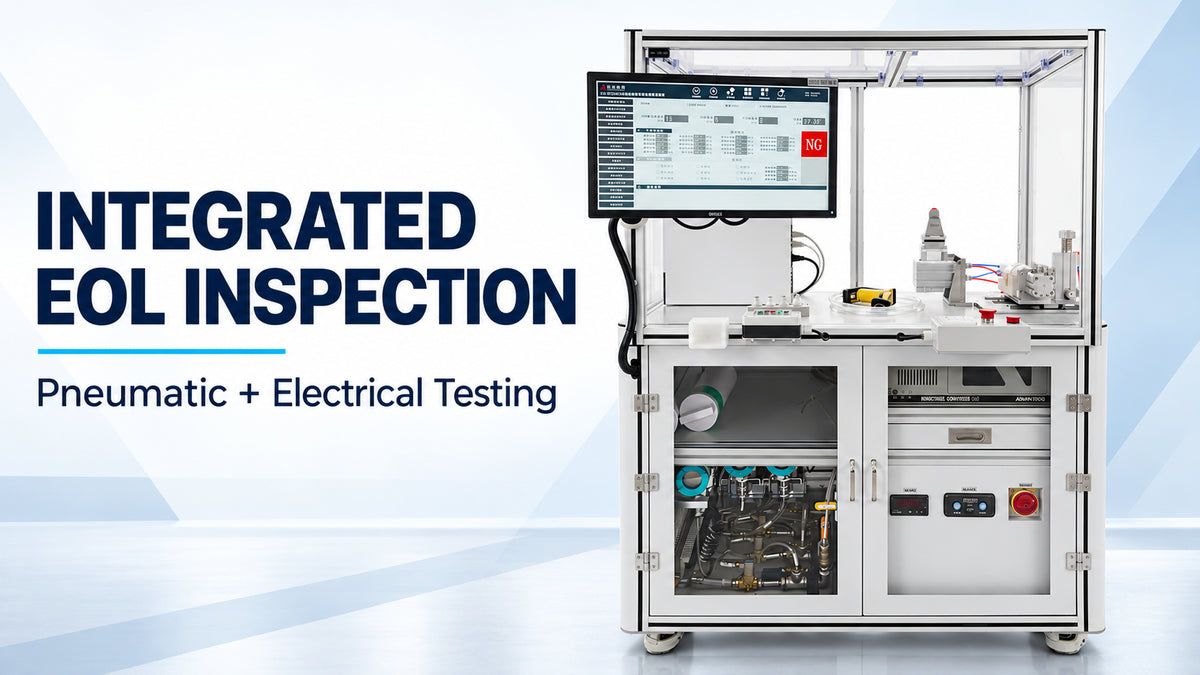
The HX-108CDS source describes one workstation combining airtightness, electrical, valve and water-path checks after a single connection setup. Recorded test data and configurable model settings support production inspection wi...
Read Article : Overcoming Bottlenecks in RO Water Purifier End-of-Line Testing: The Power of Integrated Pneumatic and Electrical InspectionTell HWAXEE which inspections currently use water and where draining or repeat handling causes difficulties.