For quality assurance directors and plant managers in the water treatment manufacturing sector, final assembly line efficiency often dictates overall profitability. Traditional wet testing methods — requiring prolonged water circulation exceeding thirty minutes — frequently create severe production bottlenecks, extended cycle times, and persistent shop floor moisture issues. To achieve lean manufacturing standards without compromising quality assurance, forward-thinking facilities are adopting automated functional testing systems that leverage pneumatic simulation to streamline quality control.
1. Analyzing Global Supply Chain & Operational Bottlenecks
Traditional end-of-line testing protocols rely heavily on manual water immersion and extended flow checks. While this ensures basic functional validation, it introduces significant operational vulnerabilities:
- Extended testing durations disrupt high-tempo automated production schedules.
- Residual moisture trapped inside components increases the risk of bacterial proliferation and long-term quality degradation.
- Human dependence on manual visual inspections of flow rates and electrical logic creates inconsistencies and increases the probability of undetected defects escaping to the market.
2. Core Technological Mechanisms & International Compliance Framework
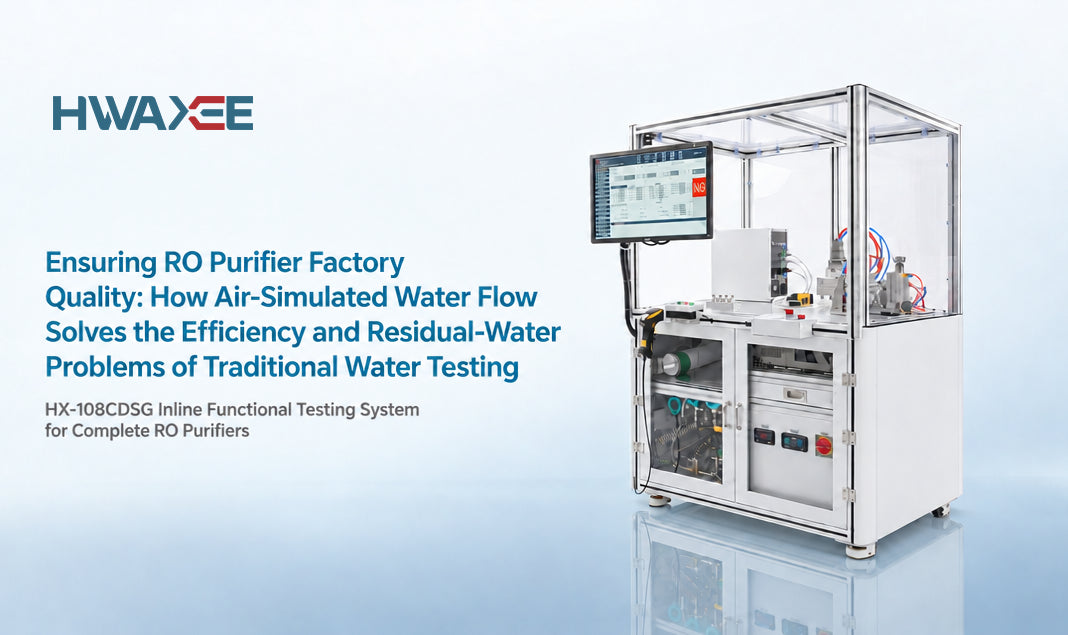
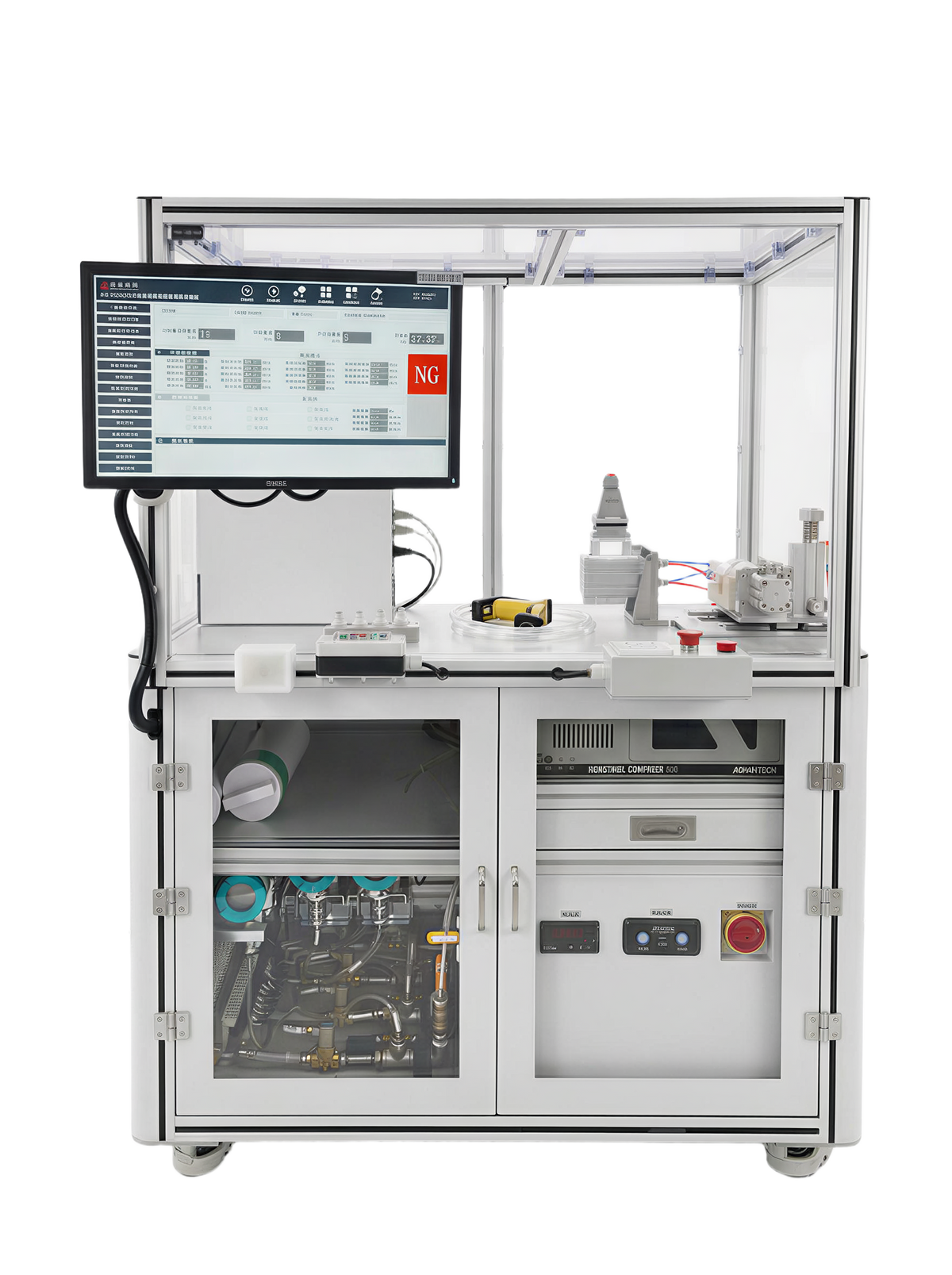
To eliminate these manufacturing hurdles, advanced engineering solutions such as the HWAXEE HX-108CDSG RO Water Purifier Online Functional Testing System utilize innovative pneumatic functional simulation. Instead of traditional water-based testing, the system uses compressed air to accurately simulate hydraulic operations, verifying booster pumps, low/high-pressure switches, and inlet solenoid valves within a concise timeframe. Supported by robust intellectual property and embedded software architecture (such as Software Copyright 2025SR2335594), the system guarantees repeatable, audit-ready performance.
3. Operational Pain Points vs. Advanced Engineering Solutions

4. Deployment Best Practices & Risk Mitigation Guide
Integrating an automated end-of-line test station requires careful synchronization with existing conveyor layouts. Utilizing pneumatic quick-connect fixtures ensures rapid part loading and unloading, keeping pace with high-speed assembly lines. Quality teams should configure automated data export parameters to align with internal compliance frameworks, ensuring every tested unit maintains a traceable digital signature for future audits.
5. Frequently Asked Questions for Overseas Buyers & Distributors (FAQ)
Q1: How can pneumatic testing accurately verify water purifier functions? A: The HWAXEE HX-108CDSG employs advanced pneumatic simulation to mimic water flow under controlled pressure ranges, enabling comprehensive evaluation of switches, valves, and electrical logic without introducing moisture.
Q2: What is the typical testing cycle time? A: The testing cycle is maintained at under 1 minute per unit, drastically improving throughput compared to conventional testing methods.
Q3: Are test results easily traceable for quality compliance? A: Yes. The system automatically records test data, evaluates pass/fail criteria, and supports comprehensive report export for quality management and traceability.